

Burglars are always finding new ways to access valuables and make their escape with them. They sometimes use heavy equipment or sophisticated drilling systems. However, Securiton’s new seismic microphones can also sniff out these attempts and skilfully detect any attempted break-ins without false alarms.
Strong, thick walls are often the order of the day when it comes to protecting valuables. Gold, jewellery, large sums of money, securities, etc. are enclosed in cash boxes, metal cases and safes. However, it has repeatedly been the case that even thick vault walls and steel cash boxes have been broken into by experienced, well-prepared burglars. While the mechanical protection may, depending on the construction, have an impact on how easy the valuables are to steal, they never offer maximum security.
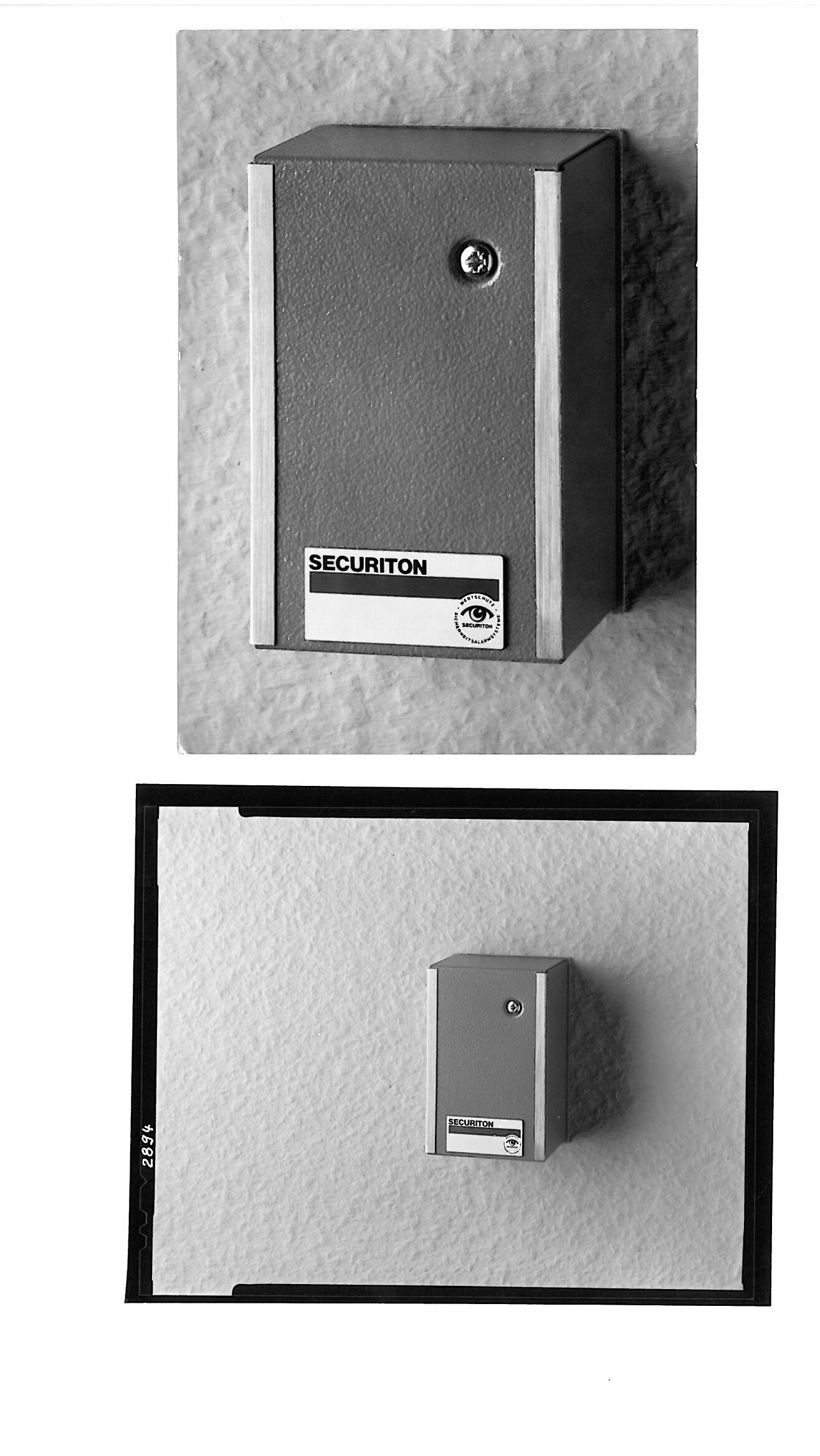
To achieve optimum security, seismic microphones can be used as components of an intrusion alarm system. Vibrations are generated in walls, ceilings or doors by drilling, hammering, welding, blasting or working with an oxygen torch. The task of the seismic microphone is to detect these vibrations and convert them into electrical alarm signals.
Application: The walls, ceilings and floors of vaults are equipped with seismic microphones. The flush-mounted version is used for new buildings and the surface-mounted version for existing buildings.
Another seismic microphone is installed in the doors of the safe. In the case of newer safes, the necessary equipment is provided for installation. On existing systems, the microphone is mounted on the outside of the door.
Cash boxes and metal cases are particularly suitable areas of application for the seismic microphone, as they are made of steel and therefore transmit structure-borne sound very well.
Depending on the size of a cash box, one microphone is permanently mounted and a second, removable microphone is attached on the door in front of the keyhole. For metal cases, a removable microphone is usually mounted on each door.
Design and function: The microphone housing contains the following elements: sound transducer, amplifier and integrator.
The sound transducer, which operates according to the piezo-electric principle (pressure = voltage), takes the generated vibrations (structure-borne sound) and converts them into electrical signals that are transmitted directly to the amplifier, which is fixed to a base plate together with the transducer.
The amplifier is mounted together with the output circuit on a printed circuit board. The amplifier’s wide frequency spectrum makes it possible to amplify the sounds of individual impacts, drills, welding apparatus and oxygen torches before feeding them to the integrator. With the adjustable sensitivity setting, it is possible to adjust the microphone according to noises in the surrounding area that should not lead to an alarm release. This makes it possible to eliminate unwanted alarms. In addition, the amplifier is equipped with a special circuit that instantly registers any single strong shockwave that might be caused by an explosive blast before triggering an alarm.
The built-in integrator registers short-term signals and then dispenses with them again after a certain time, but adds up repeating signals until they exceed the alarm threshold. This takes into account the fact that it is not possible to break through mechanical protection without causing a series of noises.