

Art is valuable, especially if the artist’s name is Paul Klee. Security was therefore a key issue when designing the new Zentrum Paul Klee in Bern. Helped by Securiton and Securitas, the famous painter’s works were transferred to the new exhibition centre without any problems. Securiton has set up a comprehensive security system to ensure that the art, public and staff here remain safe and secure in the future.
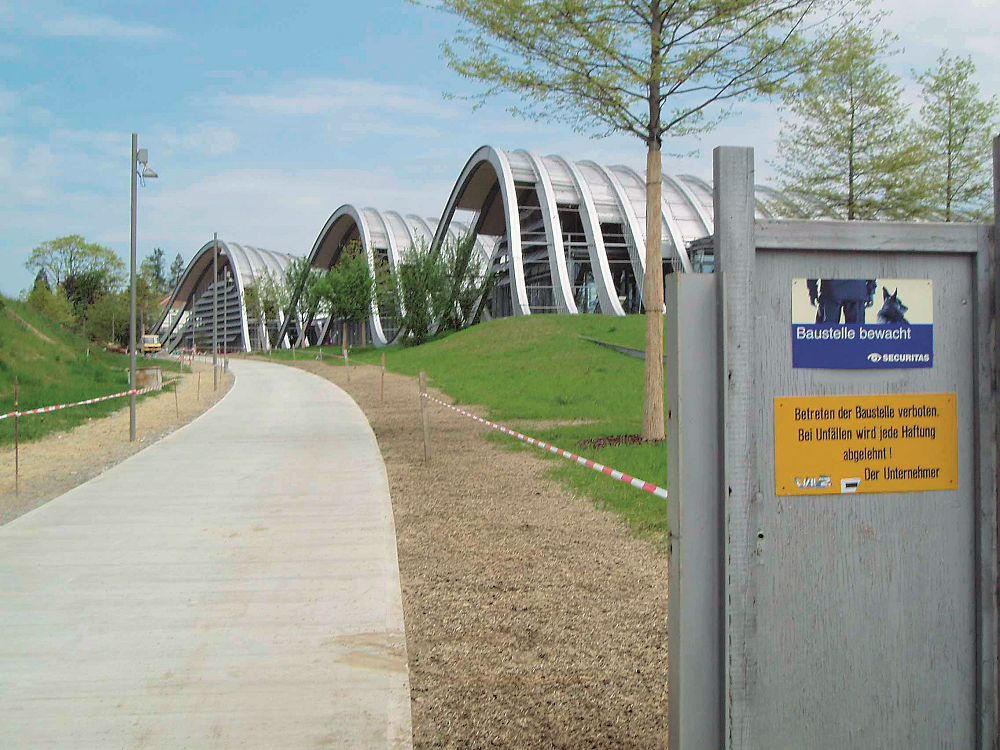
The city of Bern is home to the Bundeshaus, the Münster, the Gurten – and now also the Zentrum Paul Klee. The architecturally striking building became a landmark long before its official opening. Its three large waves have been visible from the A6 motorway for some time now. The new museum is not only intended to make a name for itself with its design, but also for its contents – the largest collection from the world-famous painter.
Swiss premiere during relocation
The first major hurdle for everyone involved was moving the works to their new home. Under strict secrecy and police protection, the extensive collection was transferred from the Museum of Fine Arts Bern to the storage room for cultural property at the new centre. This assignment is unique in Switzerland and followed two years of intense preparation. The move took place in the middle of the construction phase, which made things even more difficult. Increased security measures were required, with the Securitas Group also involved. At Securiton’s suggestion, the Securitas planning office was involved in coordinating the necessary measures. Within a very short time, Securiton implemented an autonomous intrusion and fire alarm system with additional security and intervention teams from Securitas.
The first hurdle was overcome without any problems. Around 4,000 works worth several hundred million Swiss francs were temporarily stored in the security depot prepared for them. They will now remain here until they find their definitive location in the exhibition rooms.
Conflicting security requirements
However, the storage of the paintings at the Zentrum Paul Klee only marks the start of the next security step. Once the exhibition is opened, it must be ensured that the valuable paintings, the visitors and the rooms themselves are adequately protected against fire and intrusion.
Numerous special measures had to be taken to ensure fire protection. Due to the extraordinary architecture, the planners were constantly faced with new challenges. This was because the fire protection requirements sometimes came in conflict with the desired intrusion protection measures. These conflicts – for example, between escape routes and intrusion protection – had to be weighed up and resolved. Furthermore, operating and staff organisation requirements also had to be taken into account.
Theory and practice
From the outset, it was therefore important for the planners of the security measures that not only were the individual protective measures able to be used flawlessly, but that the individual systems all functioned as a whole and as part of a uniform security system. In this way, it was possible to connect the different systems together to form a single system.
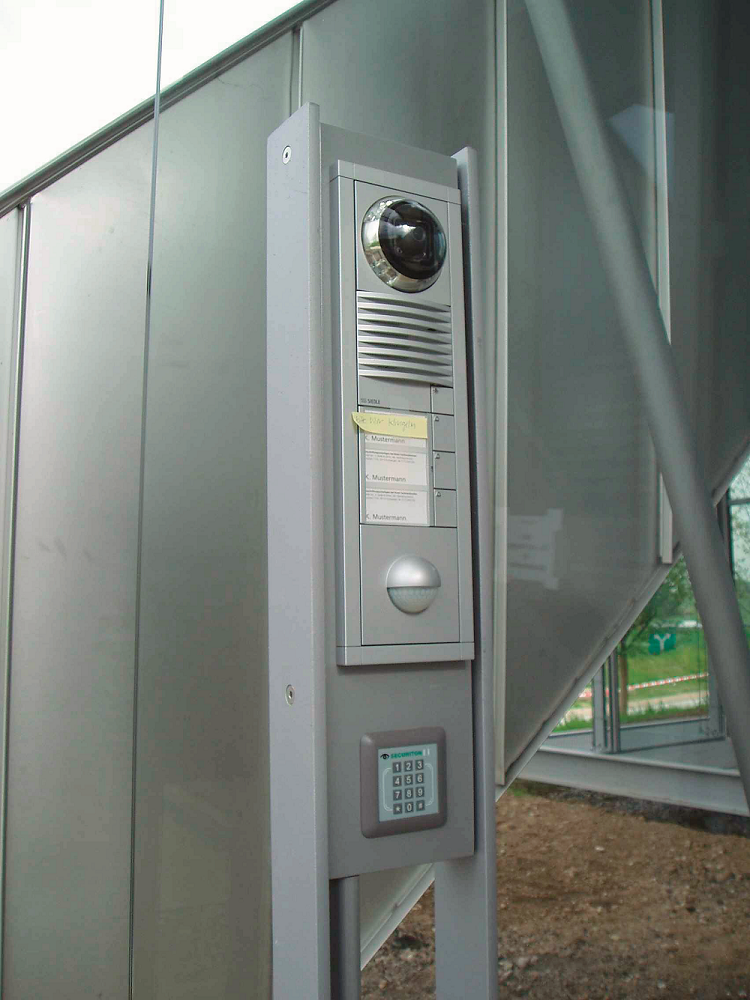
Securiton can draw on its many years of experience and extensive knowledge here. The security system installed in Zentrum Paul Klee consists of a number of Securiton product groups – the SecuriProÒ intrusion and fire alarm system, the AccessProÒ access control system, the video surveillance system and the SLS-ProÒ security management system. These security systems from Securiton are also interactively linked to several third-party systems, including the smoke extraction system, escape route technology and various building services and communication systems. The security personnel at Zentrum Paul Klee have access to an SLS-ProÒ security management system to ensure that these different protective elements come together to form a single unit. This allows those responsible to operate and evaluate all security systems.
Hoping for the best
At the Zentrum Paul Klee, an inconspicuous security system is in place for all eventualities. Befitting a project of this magnitude, care was always taken during the planning and construction of the museum to ensure that they are prepared for anything, regardless of the scope. And no matter how much the technicians are keen to see whether their systems will function properly in the event of an incident, everyone hopes this will never be the case.
Key data for security systems at the Zentrum Paul Klee
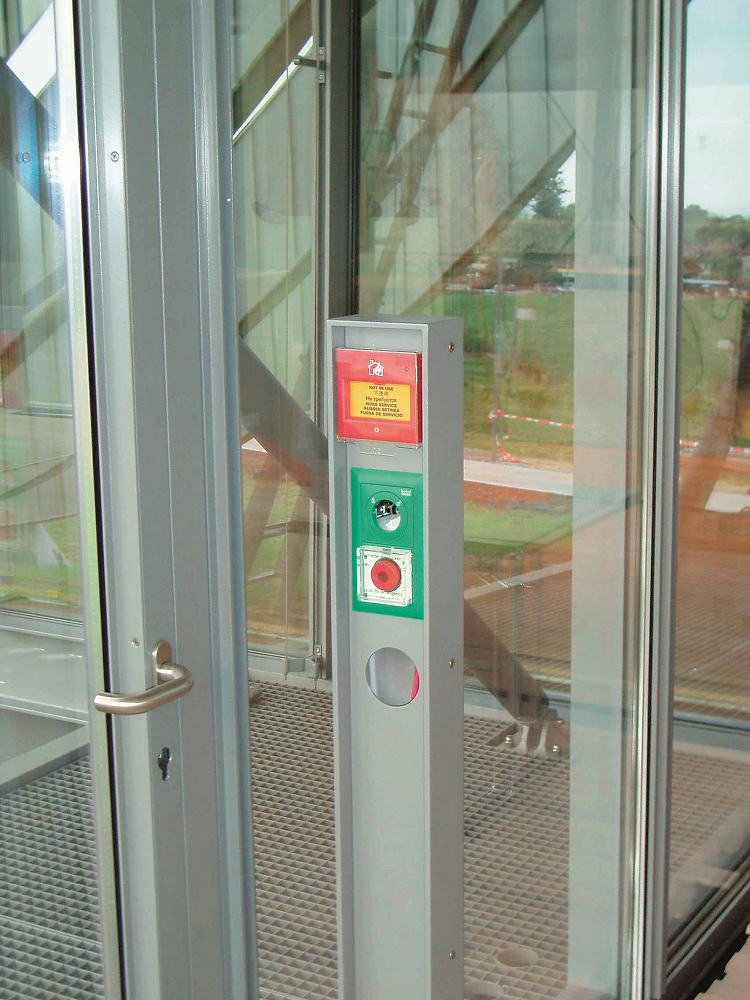
SecuriProÒ intrusion alarm system (IAS): 950 alarm transmitters such as door contacts, motion detectors, seismic microphones, alarm glass, hold-up buttons, water detectors, laser scanners.
SecuriProÒ fire alarm system (FAS): 530 fire and manual call points, 14 line-type smoke detection systems, fire incident controls for lifts, doors, smoke extraction and technology.
AccessProÒ access control (AC): 45 badge readers for door and lift control, 4 biometric iris readers in the high-security storage area.
Video surveillance (CCTV): Completely digital system with 44 cameras. The video surveillance concept is based on a digital network and safety-relevant controls by the security management system.
Security management system (SLS): Connection of all systems with different specific links to each other. In addition, the subscriber switchboard (TVA/DECT) and the building management system are connected to the security management system for transmitting internal alarm signals.
Facts and figures – Zentrum Paul Klee
The building has a covered floor space of 15,800 m2. Of Paul Klee’s 10,000 or so works, some 4,000 will be on show in the centre. This makes it the world’s most important collection of paintings, watercolours and drawings by Klee, and also features numerous biographical texts and images. The central task of the Zentrum Paul Klee is to scientifically explore Klee’s works and their significance in the cultural and social context of his time and to communicate them vividly. The museum is to become an experience centre that, in addition to art, also offers space for music and theatre events and is designed as a place for research and symposia. An average of 200,000 visitors are expected per year.
The Zentrum will employ 45 to 50 staff in administration and research, with a further 20 to 30 positions in supervision and assistance.